What is a bill of lading?
A bill of lading (BOL) is a legal document issued by the shipping company and is considered essential in Logistics and Shipping SectorThe bill of lading records the key aspects of the shipment's transit, including information on the final destination, contact details for the parties involved, and any special instructions from the shipper or consignee. It should be noted that the bill of lading is only issued after the vessel has left the port of loading.
A bill of lading is essential for several reasons. It serves as proof of the contract of carriage between the shipper and the carrier, specifying the collection point and delivery details. It also represents receipt of the goods, as signing it constitutes an acknowledgment that the carrier has received the shipment in good condition. Furthermore, the bill of lading is a legal document of ownership, allowing for the transfer of control over the goods between the different parties during transit.
The bill of lading helps ensure safe transport and provides protection for the seller, shipper, and recipient. This document must accompany the shipped products regardless of the mode of transport and must be signed by an authorized representative of the carrier, shipper, and recipient.
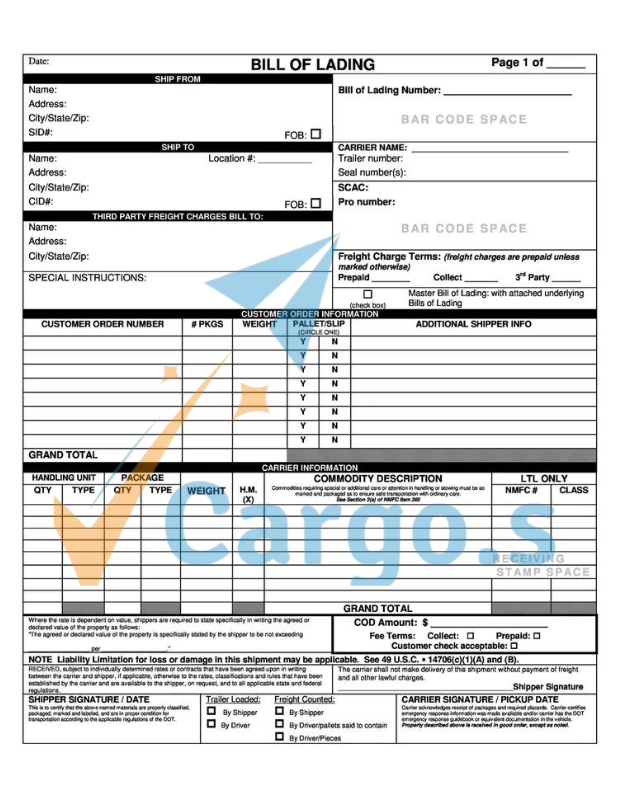
Importance and purpose of the bill of lading
A bill of lading is a vital document because it represents proof of legal ownership, enabling the holder to claim their rights to the goods. It also serves as proof of the contract of carriage, outlining the carrier's responsibilities to the parties involved in the transport of the goods.
No shipment can be transported without a proper waybill; it is not merely a record of the shipment's status and quantity, but alsoStarting point and destinationMoreover, it performs key functions that underscore its necessity in this process. The bill of lading is a legally binding document containing all the details necessary for the carrier and shipper to handle the shipment accurately. In the event of any dispute, this document can be used as a legal reference, thus motivating all parties involved to ensure its accuracy.
Bill of Lading Jobs
A bill of lading has several key functions, including:
- Evidence of the transport contract: The bill of lading is considered legal proof of the agreement between the shipper and the carrier.
- Receiving the goods: Signing the bill of lading is considered an acknowledgment that the carrier has received the shipment in good condition.
- Legal title document: It serves as a title document for the goods listed in the bill of lading.
- Payment method for drivers: Used as proof of delivery of goods.
- Shipment log during transit: This is considered a reliable record for law enforcement purposes.
- Reliable shipping claims record: Provides reliable documentation that helps in processing any shipping-related claims.
- Terms and Conditions of Transport: These represent the agreed terms and conditions for the transport of the shipped goods and their eventual release.
Components of a bill of lading
The bill of lading contains essential details relating to the shipment and the parties involved, including the following:
- Parties details:
- Names and addresses of the shipper (sender) and the recipient (recipient).
- Contact information for all parties involved.
- Shipment Description:
- A detailed description of the goods to be shipped.
- The exact weight, number of parcels, and size.
- Shipping Details:
- Loading port and unloading port.
- Date of receipt.
- Payment Terms:
- Details of the financial terms related to shipping.
- Special Instructions:
- Any special instructions relating to the shipment from the shipper or recipient.
- Type of invoice used.
- Signatures:
- The shipper's signature on the bill of lading.
- Signatures from the carrier and sometimes from the recipient.
A Bill of Lading (BOL) is a legally binding document that records key aspects of a shipment's transit, including the final destination, contact information, and any special instructions. It also serves as proof of receipt of goods and documents the shipment's status at each point of delivery. This document demonstrates the commitment of all parties involved to providing accurate information, helping to ensure a smooth and efficient transit process.
Most bills of lading also include provisions relating to the York-Antwerp Rules, which are used to determine costs and liability for lost or damaged goods. These rules are a key part of the legal framework governing shipping relationships, ensuring the protection of the rights of all parties involved.
Types of bill of lading
- Original bill of lading: The primary document used in shipping It serves as proof of the contract of carriage, receipt of the goods, and legal ownership thereof. The buyer (consignee) needs to present this bill of lading to receive the shipment.
- A bill of lading is a type of shipping document used in maritime transport that allows the buyer to take delivery of the shipment without presenting a title deed. It serves as proof of the contract of carriage and receipt of goods, but does not confer ownership of the goods.
- Straight bill of lading: non-negotiable and addressed to a specific person or entity, meaning only the addressee can receive the goods.
- Bill of lading order: Negotiable and transferable by endorsement, allowing transfer of ownership during transit.
- Clean bill of lading: indicates that the goods were received in good condition.
- Included bill of lading: Any problems, such as damaged or missing goods, are noted upon receipt.
- Conditional bill of lading: Includes certain conditions that must be met before the shipment is received.
- Domestic bill of lading: Used for transport within the country, and includes specific details about the shipment.
- Negotiable bill of lading: Allows easy transfer of ownership between different parties.
- Standardized bill of lading: Follows standardized criteria and is used in a variety of transport operations to simplify procedures.
These different types help to meet diverse shipping needs and ensure the protection of the rights of all parties involved.
Shipping document in logistics services
A waybill is a fundamental element in logistics; every shipment begins with a waybill, making the originating party responsible for preparing this important document. For brands that collaborate with Shipping companies And third-party logistics providers (3PLs) can mean that the brand or its 3PL partner must take care of creating the bill of lading.
Therefore, it is essential to have a dialogue about preferences and responsibilities related to this matter.
Telex version
A telex issuance is a method of issuing a bill of lading electronically, not a type of bill of lading itself. A telex issuance pertains to shipments for which an original bill of lading has been issued, and it acts as a message allowing the carrier to release the shipment to a specified party at the destination without requiring the original document.
This method helps to speed up the delivery of shipments and save time, as the recipient can receive the goods faster, thus enhancing the efficiency of logistics operations.
conclusion
In conclusion, the bill of lading is a vital element in facilitating international logistics operations for shipping companies, despite Challenges These are the documents you might encounter. They represent the essential link that ensures the smooth and safe transfer of goods. The success of this process depends on the accuracy of the information provided and the proper issuance of the documents. Therefore, it is crucial to invest time in understanding the details of these documents before embarking on any shipping operations to guarantee a successful and secure experience.