In a new step that enhances the position of the Kingdom of Saudi Arabia as a global logistics hub, the Saudi Railway Company announced the launch of five new logistics routes in the freight sector, as part of its strategic direction to develop the transportation network and improve the efficiency of goods movement within the Kingdom and between its main ports.
This expansion comes as part of supporting the transportation and logistics system, enhancing the connection between seaports, industrial areas, and economic centers, which contributes to improving the flow of goods and reducing transit time.
Logistics network connecting ports to economic centers
The new routes rely on a multimodal transport system that combines rail and road transport to connect the ports of the Arabian Gulf with the central and northern regions of the Kingdom, extending to the ports of the Red Sea.
This integration aims to enhance the efficiency of shipping operations within the Kingdom, improve the flow of goods between ports and logistics areas, thereby supporting the development of the transportation sector in Saudi Arabia and strengthening its role as a regional and global trade corridor.
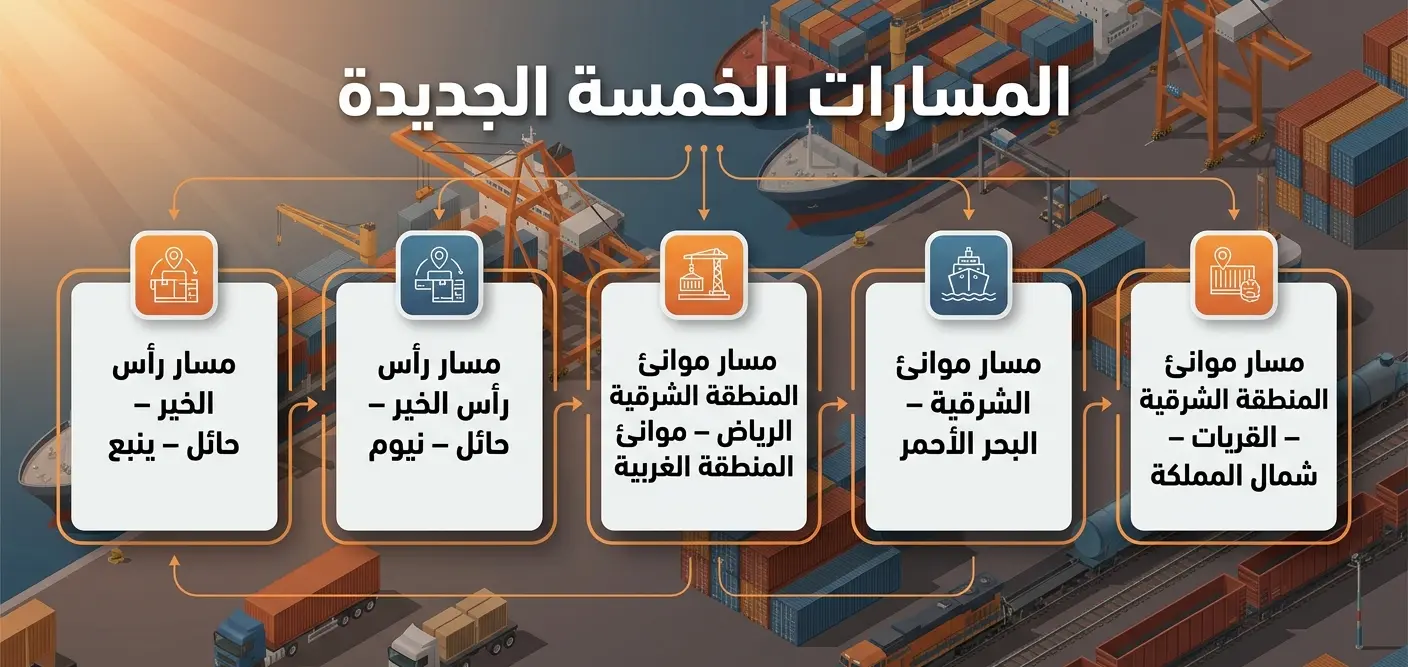
New logistics routes
The initiative includes five main pathways designed to support shipping movement and connect ports with industrial areas and economic centers, as follows:
1. Ras Al Khair Route – Hail – Yanbu
A dedicated route for transporting minerals and raw materials from the Ras Al Khair area to the Yanbu port via the Hail station, relying on multimodal transport to enhance shipping efficiency.
2. Ras Al Khair Route – Hail – Neom
This route connects the industrial area in Ras Al Khair in the city of Neom, passing through Hail, and aims to support the transportation of minerals and facilitate the movement of logistical supplies for major projects.
3. Route of the Eastern Region Ports – Riyadh – Western Region Ports
A strategic route connecting the ports of the Eastern Province with the Western ports through the dry port in Riyadh, enhancing the integration of supply chains between the East and West of the Kingdom.
4. Eastern Region Ports Route – Red Sea
A dedicated route for transporting containers and goods from the ports of the Arabian Gulf to the ports of the Red Sea with higher operational efficiency, supporting import and export activities.
5. Eastern Region Ports Route – Al-Qurayyat – Northern Kingdom
A dedicated logistics route for transit, contributing to the facilitation of container access to the northern region of the kingdom, and supporting regional and international trade exchange.
Enhancing the Efficiency of Supply Chains in Saudi Arabia
These routes contribute to enhancing the efficiency of supply chains by reducing transportation time between ports and inland areas, and improving the reliability of operational processes in the shipping sector.
It also helps improve the flow of goods, supports transit services, and enhances the efficiency of the logistics transport system within the Kingdom.
Support for industrial and mining sectors
This logistics network serves vital economic sectors, most notably the mining sector and petrochemical industries, in addition to the maritime shipping sector and supply chains.
It is expected that this development will contribute to improving shipping efficiency in Saudi Arabia and meeting the needs of local and global markets in a more flexible and stable manner.
Advanced infrastructure supporting logistical growth
This system relies on an integrated infrastructure that includes the dry port in Riyadh and several shipping yards and centers in major cities within the Kingdom.
This integration contributes to linking ports with industrial areas and economic centers, thereby enhancing the operational efficiency of the transport sector and supporting the growth of domestic and foreign trade.
The expected impact of the new logistics routes
It is expected that the new logistics routes will bring a qualitative shift in the transportation and logistics sector in the Kingdom, by enhancing integration between ports, industrial areas, and economic centers, and improving the efficiency of goods movement through multimodal transport networks.
At the operational level, these routes will contribute to reducing the transit time of shipments between inland and coastal ports, improving the reliability of supply chains, thereby increasing the responsiveness to the needs of local and international markets.
Economically, these projects will support the reduction of operational costs for transportation and shipping operations by decreasing reliance on long-distance road transport and increasing reliance on more efficient rail transport, thereby enhancing the kingdom's attractiveness for investments in the logistics sector.
Environmentally, this step contributes to reducing carbon emissions generated by trucks by shifting part of the transportation movement to railways, in addition to alleviating pressure on roads and improving traffic safety.
This expansion also enhances the Kingdom's role as a regional and global center for re-export and transit, in line with the objectives of the National Transport and Logistics Strategy, and supports the achievement of the goals of Saudi Vision 2030.
Toward a global logistics center
This step is part of the Kingdom's efforts to enhance its position as a key hub in global trade and to develop the transportation and logistics sector in line with Saudi Vision 2030.
As the development of logistics routes in the Kingdom continues, the Saudi Railway Company continues its role in supporting the integration of transportation systems and enhancing the efficiency of supply chains, in line with the developments in international trade and to boost economic growth.