What is air freight?
Air freight can simply be described as the process of transporting goods internationally or domestically using aircraft. This method is considered fast and reliable for moving goods, especially high-value items, perishable materials, and other time-sensitive products.
Air freight is characterized by short transit times, ranging from a few hours to a few days, making it an ideal option for urgent orders. Although it is more expensive than sea freight, shipping high-value goods by air can be more cost-effective in some cases.
Companies from various sectors, such as manufacturing, retail, healthcare, and technology, use air freight services to meet tight deadlines and take advantage of available market opportunities. With the increasing demand from customers for fast delivery, air freight is the ideal solution to efficiently meet their logistical needs.
This article aims to help companies better understand the air freight process, enabling them to make informed decisions about the best transportation methods suitable for their needs.
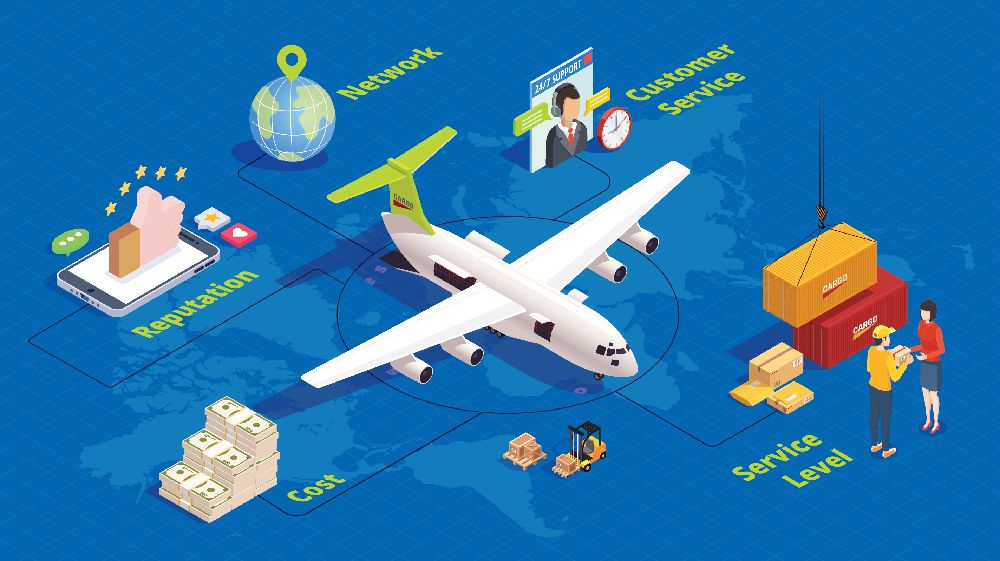
Air freight requirements
When it comes to air freight, there are several essential requirements that must be considered to ensure the safe and efficient transport of goods.
Item:
This is the most important element. The goods must be ready for shipment and comply with air freight laws and regulations, such as restrictions on shipping dangerous goods or perishable materials.
Secondly, documentation plays a vital role in the shipping process. Accurate documents such as bills of lading, invoices, certificates of origin, and any additional documents that may be required depending on the type of goods and their destination must be provided. These documents facilitate customs clearance and ensure the smooth delivery of the shipment.
Third, packaging is essential for protecting goods during transport. Packaging must be robust and appropriate for the type of goods, taking into account factors such as impact, humidity, and temperature. Using suitable packaging materials helps reduce the risk of damage and ensures that goods arrive in good condition.
Overall, compliance with these requirements enhances the efficiency of the air freight process and ensures a successful shipping experience.
Air Freight Supply Chain: Key Roles
The air freight supply chain includes six key parties, each playing an important role:
- The importer:
The entity that requests goods from abroad, where it identifies needs, searches for suppliers, and coordinates with shipping agents to secure shipping and customs clearance. - Supplier: The source that provides the goods, undertakes their production or supply, organizes the shipping process, and issues the necessary invoices and documents.
- Independent agent or commercial service companies: Act as a link between the importer and the supplier, organizes transportation, assists with customs clearance, and provides logistical services such as warehousing and distribution.
- The recipient: The party that receives the shipment and is responsible for receiving the goods and ensuring that they conform to the required specifications.
- Airport and aircraft operator: Those responsible for managing operations at the airport, including loading and unloading cargo, and providing security and safety during the transport process.
- Shipping and postal services: These include express shipping and postal companies that offer various options for transporting goods, contributing to faster shipping processes and providing multiple options to meet customer needs.
How does air freight work?
The air freight process involves several essential stages to ensure the efficient and safe transport of goods. Here are the key steps:
- Shipment Booking and Documentation: The process begins with the shipper contacting the air freight forwarder or carrier to book the shipment. Documents such as the bill of lading, commercial invoice, and packing list are prepared, along with any required permits or certificates.
- Goods assembly and packaging: Goods are prepared according to air freight standards. They must be well protected, using appropriate packaging to ensure safe transport.
- Transportation to the airport: Goods are transported to the departure airport, either by the shipper or via a logistics provider. Specialized vehicles such as trucks are used to transport the shipments.
- Loading onto the aircraft: After arriving at the airport, the shipment undergoes security screening and is then carefully loaded onto the aircraft. Airlines prefer to load cargo into specialized containers known as Unit Loading Devices (ULDs), the dimensions of which are determined by the aircraft type and its location within the fuselage. ULDs are weighed and balanced, making it easy to track the containers and their contents.
- Air transport: The aircraft departs from the airport of origin and heads to the airport of destination. During the flight, goods are exposed to various environmental conditions that may affect certain types of goods.
- customs clearance:
Upon arrival at the destination airport, the shipment is subject to customs clearance procedures. Customs officials check the documents and assess any applicable duties before releasing the goods. - Delivery to the consignee's location: After customs clearance, the goods are transported to their final destination, whether to a warehouse or directly to the customer. This depends on the agreement between the shipper and the consignee.
Air freight features
Air freight has several advantages that make it a preferred option in some cases compared to land freight.Marine:
- Speed of delivery: Short transit times are one of the key advantages of air freight. Shipments can typically be expected to arrive within 2-3 days, making it ideal for time-sensitive goods.
- Typical goods: Due to higher air freight costs, companies prefer to ship high-value goods, such as pharmaceuticals and electronics. Perishable goods, such as flowers and fruit, are also common examples of items shipped by air.
- Rapid market response: Air freight offers competitive advantages to manufacturers, as they can use short transit times to get production samples or first orders to market quickly.
- Express shipping services: Express shipping providers offer faster air freight options, typically focusing on smaller and higher-value items, providing an efficient response to customers.
Understand the cost of air freight
1. Air freight rates
The cost of air freight is affected by several key factors, including financial conditions, social factors, and operating expenses:
- Financial conditions: Air freight rates depend on economic factors such as fuel prices, exchange rates, and market demand. Higher fuel prices, for example, lead to increased shipping costs, which are reflected in the final price.
- Social factors: Geopolitical events, regulatory changes, and labor disputes directly impact shipping operations. These factors can disrupt supply chains, leading to delays or increased costs. Political crises in certain regions may necessitate the use of alternative shipping routes, driving up prices.
- Operating expenses: Air freight companies' operating costs include expenses related to labor, aircraft maintenance, and infrastructure. These expenses contribute to the pricing structure, as companies ensure reliable and efficient operations, which is reflected in the final prices.
2. Types of goods in air freight
Goods shipped by air are generally considered high-value or time-sensitive. These goods include:
- Perishable goods: such as fresh food items (meat, fruits, and vegetables) that need to be transported quickly to maintain their quality.
- Luxury goods: such as jewelry and electronics, where high shipping costs justify the value of the item.
- Pharmaceutical preparations: which require short transport times to ensure their effectiveness.
Companies prefer to use air freight for goods that need to arrive quickly, giving them a competitive advantage.
3. Volumetric weight
Volumetric weight is a crucial factor in determining air freight costs. It is calculated based on the dimensions of the shipment and is used when the shipment is large but lightweight. Volumetric weight is calculated using the following formula:
Volumetric weight = (Length (cm) × Width (cm) × Height (cm)) ÷ 6000
Volumetric weight is compared to actual weight, and the cost is applied based on the greater weight. This system helps airlines optimize space utilization within the aircraft, ensuring appropriate charges are levied for large shipments that may occupy significant space without being heavy.
When should you choose air freight?
Air freight can be the best option in the following cases:
- Time-sensitive goods: If you have goods that need quick access, such as pharmaceuticals or perishable materials.
- High-value goods: such as jewelry and electronic devices, where the high cost of securing express transport is justified.
- Increased market demand: When the market requires a rapid response to customer requests, it calls for urgent shipments.
- Space saving: When storage space is limited and you want to reduce waiting time.
Tips for those interested in air freight
- Choosing the right shipping agent: Shipping agent He has a good reputation and experience in the field of air freight.
- Plan ahead: Prepare all necessary documents in advance, such as the bill of lading and invoices, to avoid any delays.
- Proper packaging: Ensure the goods are well-packaged to protect them during transport. Use appropriate materials. wrapping Durable and suitable for the type of product.
- Monitoring shipping costs: Be aware of factors that may affect shipping costs, such as volumetric weight and fuel prices, and try to compare different options.
- Continuous communication: Maintain effective communication with all relevant parties, including the shipping agent and recipients, to ensure the process runs smoothly.
Leading air freight companies in Saudi Arabia
Saudi Arabia boasts a number of air freight companies offering diverse services to meet the needs of individuals and businesses. Here are some of the most prominent:
- Saudi Arabian Airlines (Saudi Arabia):
It is considered the largest airline in the Kingdom, providing air cargo services across a wide network of domestic and international destinations. - company DHL:
It provides fast and reliable shipping services, with options for delivering parcels and goods worldwide. - company FedEx:
Express air freight services are offered, with a focus on commercial shipments and small parcels. - company UPS:
It offers a variety of shipping services including air freight, with options tailored for business. - Badr International Company (BIS): It is considered one of the leading companies in providing air freight services in the Kingdom, with a focus on providing integrated shipping solutions.
- company Aramex Aramex offers outstanding air and land freight services and is known for providing integrated logistics solutions.
conclusion
Air freight represents one of Logistics solutions Air freight is a vital logistics solution in modern trade, combining speed and reliability in transporting goods. By facilitating the movement of goods, air freight contributes to strengthening the global economy and meeting the growing needs of markets.
Air freight offers numerous benefits, such as reduced waiting times and customized shipping options to meet diverse customer needs. With ongoing innovation in the sector, further advancements can be expected that will enhance the efficiency and effectiveness of air freight services.
Therefore, it is essential for companies to be aware of the details of this process and understand the different roles in the supply chain to ensure they make the most of air freight, thereby enhancing their competitiveness in local and international markets.