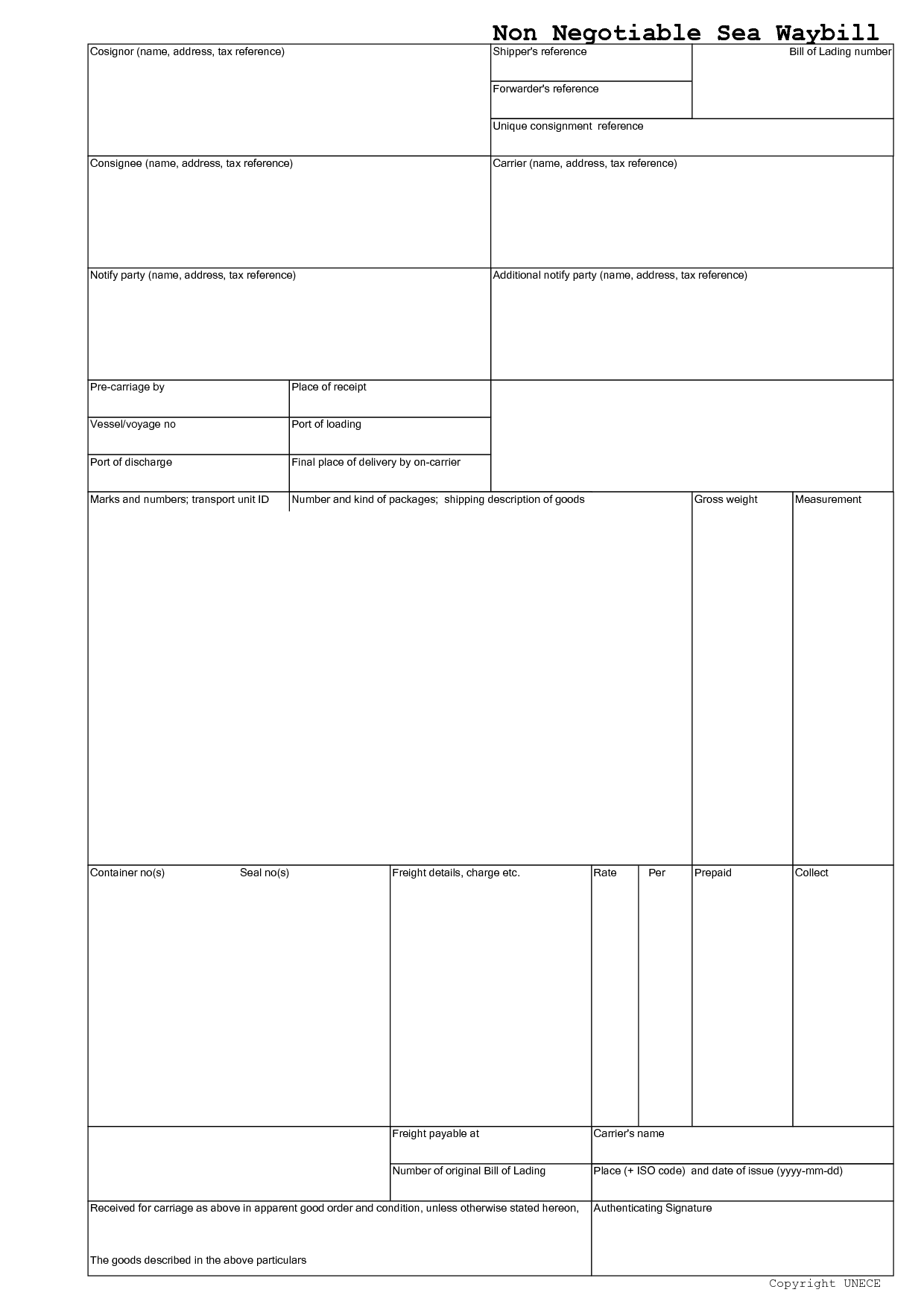
Definition of a Bill of Lading
A bill of lading, also known as a direct bill of lading or express bill of lading, is a document used in shipping To confirm receipt and loading of goods onto the vessel. This document is considered a non-negotiable contract of carriage and serves as a receipt for the goods transported, enabling the recipient to take possession of the shipment upon its arrival at the port of destination.
The bill of lading is issued by the shipowner or freight forwarder and is printed in several original copies, one of which is given to the person responsible for loading the goods after they have been received on board the ship.
A bill of lading is considered a negotiable guarantee, which means that the person who buys it not only gets the right to receive the goods, but also acquires the right to dispose of them.
This document also helps identify the legal owner of the goods. Once the shipment is received, the recipient can easily verify their identity and accept the shipment. In general, a bill of lading serves a evidentiary function, helping to expedite the shipping process and reduce formalities.
Features of a sea waybill
A bill of lading is a vital document, and here are its key features to help you assess whether it is the right option for you:
- Fast delivery: Used to deliver goods quickly without waiting periods, as ownership can be transferred before shipment, which facilitates the delivery of goods as soon as they arrive at the port.
- No additional documents required: No further documentation is required to complete the transfer of ownership of goods.
- Ease of handling: It is not a paper document, which makes it easier to manage compared to a traditional waybill.
- Avoid losing documents: This helps avoid the problem of losing the original document during shipping, as there is no need to send documents.
- Payment control: Payments are arranged between the sender and the recipient in advance, eliminating bank intervention during shipping.
- Trust between the parties: Mutual trust between the sender and the receiver is essential to avoid any problems.
The importance of the bill of lading in customs clearance
The bill of lading plays a key role in facilitating customs clearance Here are its main benefits:
- Providing accurate data: It contains important information that contributes to determining fees and ensuring compliance with regulations.
- Reducing errors and delays: Helps minimize errors that could lead to shipping delays or rejections.
- Enhancing communication: It facilitates communication between parties, increasing transparency and reducing conflicts.
- Saving time and costs: Avoiding delays and additional fees, thus speeding up customs inspection procedures.
- Using modern technology: The electronic bill of lading contributes to speeding up the exchange of information and reducing errors.
Sea waybill jobs
A bill of lading is an important document that accompanies shipments, especially in international transactions. This document performs two main functions:
- Receipt of loaded goods: The document confirms receipt of the goods and documents their loading onto the ship.
- Proof of the transport contract: The document serves as proof of the agreement made between the shipper and the carrier, thus helping to define the obligations and responsibilities of both parties.
Types of sea waybill
- The original bill of lading is the primary document used to release goods upon arrival at their destination. It is essential to ensure the importer receives ownership of the goods.
- A consolidated bill of lading is used to combine multiple small shipments into one large shipment. This simplifies the transportation process and reduces shipping costs, saving time and effort.
- Electronic bills of lading: They have become common in the modern era, as they contribute to speeding up shipping and customs clearance processes by facilitating the electronic exchange of information, thus reducing the need for paper documents.
Bill of lading information
The bill of lading includes important information such as:
- Shipper information: Name, address, contact information
- Importer information: Name, address, contact information
- Product description: type of goods, quantity, weight, number of packages
- Destination of goods: The location where the goods will arrive
- Terms of Transport: The terms and conditions agreed upon between the shipper and the importer
- Signature of the shipping company representative: To guarantee the accuracy of the information and the company's compliance with the agreed terms.
- Shipment details: Port of boarding, port of arrival, vessel name and voyage number, pickup location, delivery location, cargo description, weight and dimensions, loading date Or the container number in the case of full container load (FCL) shipping. Weight and dimensions, number of parcels, loading date.
Advantages and disadvantages of a sea waybill
| Advantages | Disadvantages |
|---|---|
| 1. Facilitating the shipping process, as you do not need to present the document at the port of destination. | 1. Reducing the shipper’s control over the shipment, which may result in the importer receiving the goods without the need for the original document. |
| 2. The recipient can receive the goods even if delivery is delayed by the shipping lines. | 2. Not useful in transactions related to letters of credit or cash payments against documents. |
| 3. Reducing the time spent on the detention expenses process and limiting late fees. | 3. It may lead to complications and fraud, as importers can receive the shipment without the original documents. |
| It helps reduce inefficiency and inconvenience in receiving goods. | 4. The importance of a thorough analysis of the circumstances before using the document to ensure the safety of the parties involved and the goods. |
The difference between a sea waybill and a bill of lading
The bill of lading is considered Shipping document (BOL) These are important documents for transporting goods, whether domestically or internationally. The following is a comparison illustrating the difference between the two documents:
| Standard | Bill of Lading (BOL) | Sea waybill |
|---|---|---|
| Ownership | It serves as proof of ownership for the goods. | It does not function as a title deed. |
| Purpose | Proof of contract, shipping receipt, transfer of ownership | Proof of transport contract and receipt only |
| Tradability | tradable financial instrument | Not negotiable |
| Document issuance | An original bill of lading is issued | No original bill of lading is issued. |
Understanding these differences helps traders make better decisions about the appropriate documentation for transporting their goods.
Is a sea waybill the same as a telex document?
No, a telex document is not the same as a bill of lading. Here's how to explain the difference:
| Advantage | Sea waybill | Telex document |
|---|---|---|
| Definition | A document issued for the transport of goods by ship. | An email sent from the shipping company to the port of destination. |
| the goal | Accelerating the transfer process between the two parties. | Send instructions when it is not possible to send the bill of lading. |
| Document issuance | It occurs when both parties know each other. | Issued by the agent at the port of loading after delivery of the original bill of lading. |
| Ownership | It is considered a document of ownership for the goods. | It does not relate to the transfer of ownership. |
| Usage | It is used to transport shipments directly. | It is used for details of the transportation process and to save on postage costs. |
conclusion
A bill of lading is a vital tool in the maritime transport industry, facilitating the shipment of goods, whether domestic or international. This document provides guarantees for both the shipper and the consignee, serving as proof of the contract of carriage and delivery of the shipment. By understanding the different types of bills of lading, such as original, direct, and electronic, traders can make informed decisions that ensure their operations run smoothly and securely. With the growth of international trade, the bill of lading remains essential for achieving efficiency and effectiveness in the supply chain, enhancing companies' competitiveness in global markets.